Blog · Basics
Kiss cut vs die cut stickers: which to choose
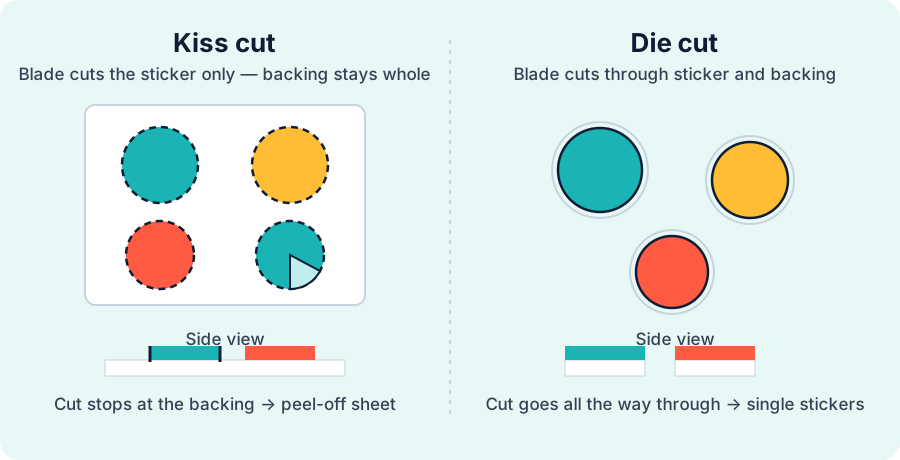
The difference is one thing: how deep the blade goes. A kiss cut slices only the sticker and leaves the backing whole, so stickers peel off a shared sheet. A die cut goes all the way through, so each sticker is a separate piece in its own shape. Everything else — when to use each, cost, durability, how to make them — follows from that.
Affiliate disclosure: As an Amazon Associate, I earn from qualifying purchases.
Fast version: use kiss cut for sheets, sets, and packaging (stickers peel off one backing, edges stay protected); use die cut for single statement stickers in a custom shape. Both start from the same artwork — lay it out in the free Print Then Cut tool and just pick the cut depth when you cut.
The actual difference
A sticker is two layers: the printed vinyl or paper on top, and the backing (liner) underneath. The only thing separating kiss cut from die cut is which layers the blade goes through.
- Kiss cut — the blade cuts only the top layer and stops at the backing, like a kiss. The backing stays as one whole sheet, so multiple stickers sit together and peel off individually.
- Die cut — the blade cuts through both layers, so the sticker and its backing are trimmed to the same custom shape. Each one is a separate piece.
Side-by-side comparison
| Kiss cut | Die cut | |
|---|---|---|
| Cut depth | Top layer only | Through both layers |
| Backing | One shared sheet | Trimmed per sticker |
| Best for | Sheets, sets, packaging | Single statement stickers |
| Peeling | Easy — bend the sheet | Peel each individually |
| Edge durability | Border protects edges | Edges more exposed |
| Shape | Any; border can be square or contour | Custom outline is the whole look |
| Cost to produce | Cheaper in batches | Slightly higher (handled singly) |
| By hand? | Hard (must spare the backing) | Easy (cut right through) |
When to choose kiss cut
Kiss cut wins whenever stickers travel together or get sold as a set. Because the backing stays whole, a sticker sheet of ten designs peels one at a time and lies flat in an envelope. The un-cut border also protects the edges — nothing catches and lifts in a bag or pocket. Reach for kiss cut for planner sticker sheets, product-label sets, packaging inserts, party favors, and anything you're mailing. It's also the faster format to produce at volume, since one cut handles the whole sheet.
When to choose die cut
Die cut wins when the shape is the point and the sticker stands alone. A single die-cut sticker cut tightly to a custom outline — a logo, a mascot, a slogan — reads as premium and looks great stuck to a laptop or water bottle. It's the classic "one cool sticker" format: hand it out singly, sell it as a standalone, or slap it on packaging as a seal. The trade-off is that each one is handled individually, so it's a little slower and pricier per sticker, and the trimmed edges are slightly more exposed than a bordered kiss cut.
How to make each at home
Both start from the exact same file — you only change the cut when you cut.
- With a Cricut: upload your sheet, choose a material setting that matches the stock, then test pressure so the blade stops at the backing for a kiss cut or passes through for a die cut. The sticker paper settings cheat sheet covers material and pressure choices, and the full walkthrough is in how to make stickers with a Cricut.
- By hand: hand-cutting almost always makes die cut singles — it's very hard to spare the backing with scissors or a knife. That's totally fine for singles. See how to make stickers without a Cricut.
Whichever you pick, start with the layout: design your sheet in the free Print Then Cut tool and export a clean PNG with the contour drawn.
Frequently asked questions
What is the difference between kiss cut and die cut stickers?
A kiss cut cuts only the sticker and leaves the paper backing intact, so several stickers peel off one shared sheet. A die cut goes all the way through both layers, so each sticker is a separate piece cut to its own shape. Same artwork — only the depth of the cut differs.
Are kiss cut or die cut stickers better?
Neither is better overall. Kiss cut is better for sheets, sets, packaging, and easy peeling, and it protects the edges. Die cut is better for single statement stickers, custom shapes, and a premium standalone look. Choose by how the sticker will be used.
Are die cut stickers more expensive?
Usually a little, because each die cut sticker is trimmed to its own shape and handled individually, while kiss cut stickers share one sheet and backing. At home the difference is mostly your time; kiss-cut sheets are faster in batches.
Can you make kiss cut stickers at home?
Yes. A Cricut can make a kiss cut when the material setting and pressure stop the blade at the backing; test a small area because paper, vinyl, and laminate change the required setting. By hand it's much harder to leave the backing intact, so hand-cut stickers are usually die cut singles.
Do kiss cut stickers peel easily?
Yes — that's the point. Because the backing stays whole, you bend the sheet and lift each sticker cleanly, and the un-cut border protects the edges from catching and lifting.
- Cricut Explore 5 — does kiss cut and die cut from the same file
- Cricut Joy Xtra — compact Letter-paper option for either cut
- Cricut Maker 4 — either sticker cut plus specialty tools
- Cricut Maker 5 — current Maker model for sticker and specialty work
- Matte sticker paper — great for kiss-cut sheets
- Printable vinyl — durable base for die-cut singles
- Clear laminate sheets — protect exposed edges; use matte/non-reflective stock for Cricut sensor workflows
What to read next
Ready to cut? Learn the workflow in how to make stickers with a Cricut, dial in the exact pressure in the sticker paper settings cheat sheet, or go machine-free with how to make stickers without a Cricut. Then lay out a sheet in the Print Then Cut tool.